
Difference Between Cat 5 and Cat 6 Cable
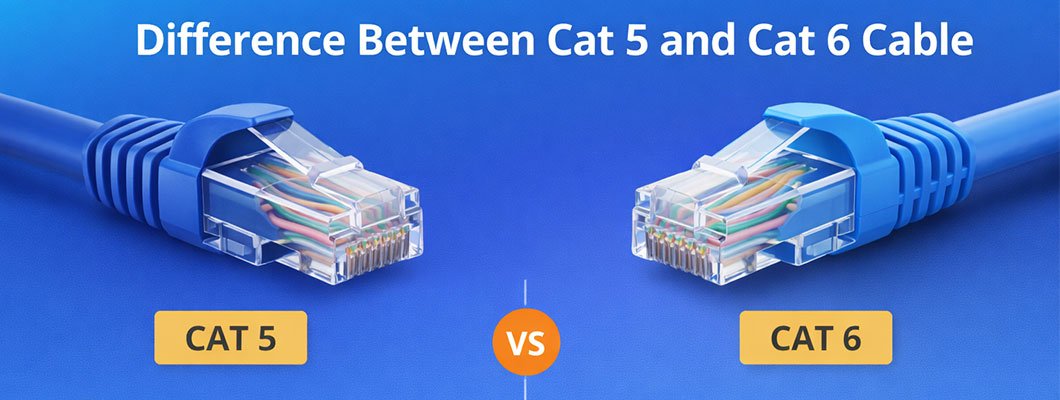
Difference Between Cat 5 and Cat 6 Cable
When setting up a home or office network, choosing the right Ethernet cable is crucial for speed, stability, and future-proofing. Two of the most common options are Cat 5 and Cat 6 cables. Although they may look similar, their performance and use cases are quite different.
What Is a Cat 5 Cable?
Cat 5 (Category 5) cable is an older type of Ethernet cable that has been widely used for basic networking.
Key Features of Cat 5 Cable:
-
Supports speeds up to 100 Mbps
-
Maximum bandwidth of 100 MHz
-
Suitable for basic internet browsing and email
-
Mostly replaced by Cat 5e in modern networks
-
Lower cost but limited performance
Cat 5 cables are now considered outdated and are rarely recommended for new installations.
What Is a Cat 6 Cable?
Cat 6 (Category 6) cable is a newer and more advanced Ethernet cable designed for high-speed and stable connections.
Key Features of Cat 6 Cable:
-
Supports speeds up to 1 Gbps (and up to 10 Gbps for short distances)
-
Bandwidth up to 250 MHz
-
Better shielding to reduce interference and crosstalk
-
Ideal for high-speed internet, gaming, and office networks
-
More future-proof than Cat 5
Cat 6 cables are widely used in modern homes, offices, and commercial networking setups.
Cat 5 vs Cat 6 Cable: Key Differences
1. Speed Performance
The most important difference between Cat 5 and Cat 6 cable is speed.
-
Cat 5: Up to 100 Mbps
-
Cat 6: Up to 1 Gbps (10 Gbps at shorter lengths)
If you have high-speed internet, Cat 6 ensures you get the full performance.
2. Bandwidth Capacity
-
Cat 5: 100 MHz
-
Cat 6: 250 MHz
Higher bandwidth means Cat 6 can handle more data at the same time, resulting in faster and smoother connections.
3. Interference and Stability
Cat 6 cables have improved insulation and tighter twisting of wire pairs, which significantly reduces interference.
-
Cat 5: More prone to crosstalk
-
Cat 6: Better noise reduction and stability
This makes Cat 6 ideal for crowded network environments.
4. Usage and Application
-
Cat 5 Cable: Basic networking, old systems, low-speed internet
-
Cat 6 Cable: High-speed internet, gaming, streaming, CCTV, offices, data centers
For modern applications, Cat 6 is clearly the better choice.
5. Price Difference
Cat 6 cables are slightly more expensive than Cat 5 cables, but the performance upgrade makes them worth the investment.
-
Cat 5: Cheaper but outdated
-
Cat 6: Slightly higher cost with long-term benefits
Which One Should You Choose?
If you are building or upgrading a network, Cat 6 cable is the recommended option. It offers better speed, higher bandwidth, improved stability, and future-ready performance. Cat 5 cables should only be considered for very basic or temporary setups.
Cat 5 vs Cat 6: Quick Summary
-
Cat 6 is faster, stronger, and more reliable
-
Cat 5 is older and limited
-
Cat 6 is best for modern internet, gaming, CCTV, and office use
Final Verdict
The difference between Cat 5 and Cat 6 cable mainly comes down to speed, bandwidth, and performance. While Cat 5 may still work for simple tasks, Cat 6 is the smarter choice for today’s high-speed networking needs. Investing in Cat 6 ensures better performance now and compatibility with future network upgrades.

Leave a Comment